Upholstery cleaning on Finchley Road Swiss Cottage: a practical guide for fresher, longer-lasting furniture
If your sofa has started looking a little tired, your dining chairs have picked up everyday marks, or the arm of your favourite seat has that dull, lived-in look, you are not alone. Upholstery cleaning on Finchley Road Swiss Cottage is one of those services people often delay until the furniture is clearly showing it. Truth be told, by then the fabric has usually been holding onto dust, body oils, crumbs, pet hair, and odours for longer than you think.
This guide explains how upholstery cleaning works, when it makes sense, what results to expect, and how to choose the right approach for your furniture. It also covers practical steps, common mistakes, and the kind of small details that make a real difference in a busy London home or workplace.
Why Upholstery cleaning on Finchley Road Swiss Cottage Matters
Upholstery works hard. It catches dust from open windows, absorbs everyday oils from hands and skin, and quietly collects spills that seem harmless at first. On a road as busy and well-used as Finchley Road, that build-up can happen faster than people expect. If you live close to transport, have a household with children, or run a client-facing space, upholstery can pick up grime from daily traffic, shoes, bags, coats, and general movement.
Clean upholstery is not just about looks. It affects comfort, air freshness, and how long the fabric lasts before it starts to look worn. When fabric fibres are left clogged with dirt, they can become rougher, duller, and more prone to damage. That's not dramatic; it is just what happens over time. And let's face it, once a sofa starts giving off that stale, slightly dusty smell, it changes the whole room.
There is also a practical side. In homes, upholstery often sits near the centre of family life. In offices, waiting areas, rentals, or hospitality settings, it affects first impressions immediately. If you are weighing up whether to clean or replace, it is worth remembering that professional cleaning can often restore appearance far more affordably than buying new furniture.
For many people, the decision comes down to simple value. If the frame is sound and the fabric is still in good condition, cleaning usually makes a lot more sense than replacing the whole item. The good news is that most everyday upholstery can be treated carefully and effectively when the right method is used.
How Upholstery cleaning on Finchley Road Swiss Cottage Works
Professional upholstery cleaning is more than just a quick spray and wipe. It usually begins with checking the fabric type, colour stability, construction, and any visible stains or wear. That first inspection matters because cotton, wool blends, synthetic fabrics, velvet, and delicate natural fibres all behave differently. One method does not suit every piece, which is where a bit of judgement really pays off.
A typical clean may include dry soil removal, targeted stain treatment, controlled moisture application, agitation where suitable, extraction, and careful drying. Depending on the fabric and contamination level, a technician might use low-moisture cleaning, hot water extraction, encapsulation-style methods, or specialist spot treatment. The choice depends on the material and the furniture's condition, not on a one-size-fits-all routine.
Pre-testing is a sensible part of the process. A small hidden area is checked first so colour bleed or texture changes can be avoided. You do not want a fast result that leaves a watermark behind. That is the sort of thing that makes people understandably grumpy.
After cleaning, drying time matters as much as the wash itself. Good airflow, sensible room temperature, and not sitting on the furniture too early all help prevent lingering dampness. In a flat or house with limited ventilation, you may notice the difference between a rushed clean and a properly managed one within a few hours.
If your upholstery cleaning is part of a broader refresh, it can make sense to coordinate it with other nearby services such as carpet cleaning, sofa cleaning, or even curtain cleaning so the whole room feels balanced afterwards.
Key Benefits and Practical Advantages
The most obvious benefit is appearance. Clean upholstery looks brighter, more even in colour, and generally more cared for. A sofa that had gone a bit flat and grey can surprise you once its surface fibres are lifted again. It is a small thing, but it changes how the room feels.
There are also practical advantages:
- Better everyday comfort: cleaner fabric feels fresher to sit on and touch.
- Odour reduction: trapped smells from food, pets, smoke, or general use can be reduced.
- Longer fabric life: removing grit and residue helps reduce fibre wear.
- Better presentation: useful for lettings, guest accommodation, offices, and shared spaces.
- Improved hygiene: while not a medical treatment, cleaning helps reduce built-up surface contamination.
There is a psychological benefit too. A clean sofa or chair can make a room feel calm again. Sounds a bit dramatic, perhaps, but when you sit down after a long day and the fabric smells clean rather than stale, the effect is real.
In commercial or shared environments, upholstery cleaning can also support a more professional standard of presentation. If you are managing reception seating, meeting rooms, or lounge areas, clean fabric quietly says: this place is looked after.
Who This Is For and When It Makes Sense
Upholstery cleaning on Finchley Road Swiss Cottage is useful for more people than you might expect. It is not only for heavily stained sofas or "emergency" jobs after a spill. In fact, regular maintenance often gives the best long-term result.
It makes sense if you are:
- a homeowner wanting to freshen up family furniture
- a tenant preparing for move-out or a landlord getting a property ready for new occupants
- an Airbnb or short-let host looking to keep seating presentable between stays
- a business owner with waiting room or office seating
- a parent dealing with food spills, sticky marks, and everyday wear
- a pet owner managing hair, odours, or the occasional accident
It also makes sense after a broader clean or move. For example, if you are already booking end of tenancy cleaning, move-in cleaning, or move-out cleaning, upholstery often benefits from being included rather than treated as an afterthought.
One useful rule of thumb: if the item is structurally fine but visually tired, cleaning is usually worth considering. If the fabric is cracked, torn, or foam is breaking down, a clean may improve the look but it will not solve a deeper upholstery problem. Slightly obvious, yes, but easy to miss when you are hoping for a miracle.
Step-by-Step Guidance
Here is a practical, sensible way to approach upholstery cleaning without overcomplicating it.
- Identify the fabric. Check care labels where available and look at how the material reacts to light moisture and pressure.
- Inspect the item properly. Note stains, odours, thread wear, loose seams, water rings, and any previous cleaning marks.
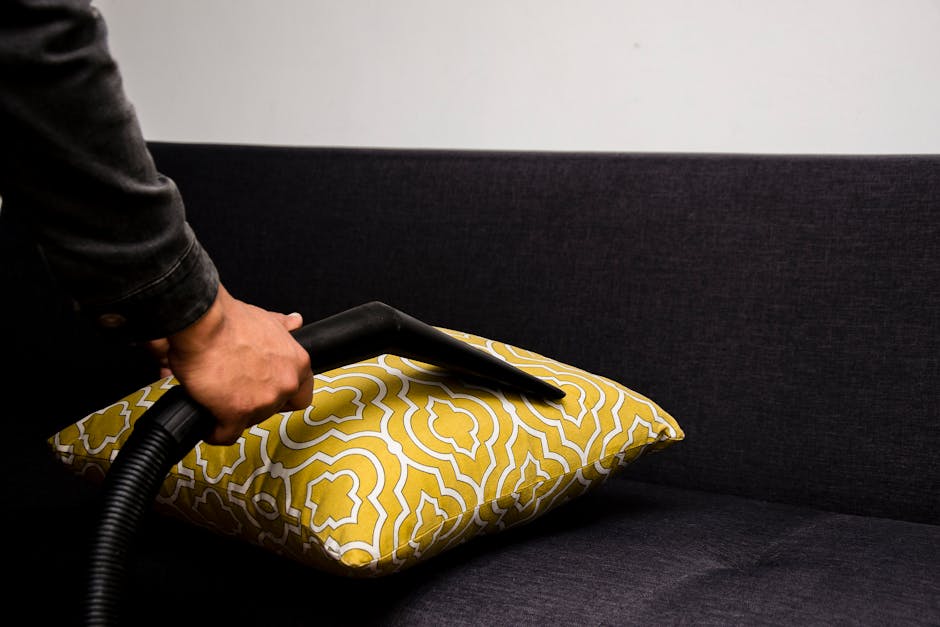
- Vacuum thoroughly. Dry soil should come out before any liquid treatment begins.
- Spot test first. A hidden area helps reduce the risk of colour loss or fabric distortion.
- Treat problem areas. Stains and traffic marks usually need specific pre-treatment, not blanket soaking.
- Clean the full surface evenly. This helps avoid patchiness and visible edges.
- Control moisture carefully. Too much water can slow drying and leave marks.
- Finish with extraction or drying support. Good drying reduces the chance of odour or re-soiling.
- Allow full drying before use. Patience here really matters.
If you are cleaning at home between professional visits, keep your approach conservative. Gentle vacuuming and immediate blotting of fresh spills are usually safer than scrubbing. Scrubbing can spread the mark, roughen the fibres, and turn one patch into a bigger one. Not ideal.
Expert Tips for Better Results
Small details make a big difference with upholstery. In practice, the difference between a decent result and a great one often comes down to patience and fabric knowledge.
1. Deal with spills quickly, but carefully. Blot first. Do not rub. If the spill is greasy, a light absorbent powder or suitable pre-treatment may help, but only if the fabric can handle it.
2. Treat odours as a separate issue. Cleaning the visible mark is one thing; removing the smell is another. Pet-related problems, in particular, often need a dedicated approach such as pet stain odour removal.
3. Keep cushions rotated. You will often see uneven wear where people always sit in the same spot. Swapping cushions or rotating them can slow that down.
4. Watch for sunlight effects. Near windows, one arm or seat panel may fade faster than the rest. Cleaning will not reverse fading, but it can improve how evenly the fabric reflects light.
5. Don't ignore the surrounding room. If a sofa sits beside dusty curtains or a clogged carpet, the upholstery will not stay fresh for long. A joined-up clean often works better. The room starts to breathe again, if that makes sense.
And one more thing: if you are unsure about a delicate fabric, ask for a method that suits the material rather than assuming "deeper" means "better". It rarely does with upholstery.
Common Mistakes to Avoid
Most upholstery problems after cleaning come from avoidable errors rather than the cleaning itself. Here are the ones worth watching for.
- Using too much water: oversaturation can lead to slow drying, rings, or residual odour.
- Scrubbing stains aggressively: this can push the stain deeper and damage the pile.
- Ignoring fabric labels: a method that works on one textile may ruin another.
- Cleaning only the stain: spot cleaning alone can leave a visible halo.
- Using household products blindly: some sprays leave residues that attract more dirt.
- Putting cushions back too early: even slightly damp fabric can trap smell.
There is also a planning mistake people make: waiting until a stain becomes permanent-looking. On some fabrics, early treatment helps a lot. On others, the delay changes the job from a light refresh to a much more careful restoration effort. Better to act while the issue is still manageable.
Tools, Resources and Recommendations
You do not need a van full of gear to understand what good upholstery cleaning involves. But a few tools and service pairings are worth knowing about.
| Method or tool | Best for | What to watch for |
|---|---|---|
| Vacuum with upholstery attachment | Routine dust and crumb removal | Use gently to avoid pulling threads |
| Fabric-safe pre-treatment | Localised stains and traffic marks | Always test first |
| Low-moisture cleaning | Delicate fabrics and faster drying | May need multiple passes |
| Hot water extraction | Durable upholstery with deeper soiling | Needs careful moisture control |
| Odour treatment | Pet smells, spills, food odours | Odour source must be fully addressed |
For broader home care, it can help to combine upholstery work with related services such as rug cleaning, mattress cleaning, or deep cleaning when the whole space needs a proper reset.
If the setting is a workspace, you may also want to consider office cleaning or commercial cleaning so the upholstery does not become the only clean thing in the room. That would be a bit odd, to be fair.
For pricing and scheduling, checking pricing and quotes before booking is usually the easiest way to understand what is included and whether the visit suits your furniture type and access needs.
Law, Compliance, Standards, and Best Practice
Upholstery cleaning itself is not usually a heavily regulated household task, but good practice still matters. In the UK, responsible cleaning providers should work in a way that is safe, honest, and appropriate for the material being treated. That means clear communication, sensible risk management, and care around wet surfaces, electrical items, and fragile fabrics.
If you are hiring someone into your home, office, or managed property, it is reasonable to look for signs of professionalism: insurance, clear terms, safe working methods, and transparent communication. Those are not fancy extras. They are basic trust signals.
For example, a provider should be able to explain why a certain method is chosen, whether drying time is likely to be longer on a dense fabric, and what happens if a stain does not respond fully on the first pass. That kind of plain-language explanation is what you want. No fluff, no mystery powder talk.
It can also help to review pages such as insurance and safety, health and safety policy, and terms and conditions when you are deciding who to use. If you value environmental care, recycling and sustainability is another useful page to check.
Best practice also means respecting your own household needs. If someone in the property has sensitivities to scents or cleaning residues, ask for a more careful approach. That is not overcautious; it is just sensible.
Options, Methods, or Comparison Table
Different upholstery problems call for different approaches. Here is a simple comparison that may help you decide what fits your situation best.
| Approach | Best used when | Advantages | Limitations |
|---|---|---|---|
| Light maintenance cleaning | Furniture is generally clean but dusty or slightly dull | Quick, gentle, good for upkeep | May not shift deeper staining |
| Targeted stain treatment | A few marks are the main issue | Efficient and focused | Can leave edge marks if not blended properly |
| Deep upholstery cleaning | Build-up, odour, or heavy use is visible | More thorough refresh | Usually needs longer drying time |
| Furniture replacement | Fabric is torn, faded beyond recovery, or structurally worn | Solves damage beyond cleaning | Highest cost and least sustainable |
As a rule, if the upholstery is structurally sound, cleaning is usually the first option worth trying. Replacement is the last step, not the first one. It sounds obvious, but plenty of good furniture gets thrown out too early.
Case Study or Real-World Example
A typical local scenario goes like this: a family in Swiss Cottage notices their light-coloured sofa has developed darker patches on the arms and seat cushions. It is not a single dramatic spill. More like months of everyday living. There are snack crumbs, a bit of hand cream transfer, some light pet hair, and a faint smell that becomes noticeable only when the room is shut overnight.
The first step is a careful fabric check and a proper vacuum. The technician spots that the arm panels are more soiled than the back cushions, which is common because those areas get touched most often. A fabric-safe pre-treatment is applied to the heavily used spots, then the whole seating area is cleaned evenly so the finish does not look patchy.
After drying, the sofa looks brighter and feels noticeably fresher. The family does not get a brand-new sofa, of course. That would be wishful thinking. But the room feels tidy again, and the furniture no longer dominates the space in a bad way. The improvement is enough that they decide to keep the piece for a few more years, which is often the real goal.
That is the point many people miss. Good upholstery cleaning is not about perfection. It is about restoring comfort, presentation, and useful life without overdoing it.
Practical Checklist
Use this simple checklist before booking or attempting upholstery cleaning:
- Identify the furniture type and fabric where possible
- Check for labels, discolouration, tears, or loose stitching
- Note any stains, smells, pet issues, or high-wear areas
- Decide whether you need a light refresh or a deeper clean
- Move breakables and small items away from the area
- Ask about drying time and access requirements
- Consider pairing the clean with carpets, rugs, or curtains
- Review pricing, terms, and safety information in advance
- Allow enough ventilation after the clean
- Avoid sitting on the furniture until it is fully dry
If your upholstery is part of a larger property refresh, you might also look at domestic cleaning, one-off cleaning, or house cleaning so the whole place feels genuinely reset rather than just patched up.
Get a free quote today and see how much you can save.
Conclusion
Upholstery cleaning on Finchley Road Swiss Cottage is one of the simplest ways to make a home, rental, or workspace feel cleaner without replacing perfectly good furniture. Done properly, it restores appearance, reduces lingering odours, and helps furniture last longer. Done carelessly, it can cause more bother than it solves. That is why fabric knowledge, careful drying, and realistic expectations matter so much.
The best results usually come from a calm, methodical approach: identify the material, treat stains properly, avoid oversaturating, and give the upholstery time to dry. If you are dealing with several soft furnishings at once, it often makes sense to coordinate upholstery work with related cleaning services for a more even finish throughout the room.
In the end, the goal is pretty straightforward: cleaner fabric, a fresher room, and furniture that earns its keep for a bit longer. Small win, but a good one.
And honestly, there is something satisfying about sitting down on a sofa that looks cared for again. It changes the mood of the room in a quiet, comforting way.
Frequently Asked Questions
How often should upholstery be professionally cleaned?
That depends on use, fabric type, and household conditions. For a busy family sofa or office seating, periodic cleaning is usually sensible before dirt becomes deeply embedded. Light-use furniture may need it less often. If you notice odour, dullness, or visible traffic marks, that is usually a sign it is time.
Can all upholstery fabrics be cleaned the same way?
No. Different fabrics respond differently to moisture, heat, and agitation. Velvet, wool blends, synthetics, and natural fibres may all need different methods. A proper check first is important because one approach does not fit everything.
Will upholstery cleaning remove pet smells?
It can help a great deal, especially when the odour is caused by surface contamination or recent incidents. Stronger or repeated pet odours may need dedicated treatment. If that is your situation, a service focused on pet stain odour removal is often the better route.
How long does upholstered furniture take to dry?
Drying time varies by fabric, method, ventilation, and how much cleaning was required. Light cleaning may dry fairly quickly, while deeper work can take longer. Good airflow helps. The safest answer is always to wait until the item feels fully dry before using it normally.
Is upholstery cleaning worth it for an older sofa?
Often, yes, if the frame and fabric are still in decent shape. Cleaning can refresh older furniture and delay replacement. If the material is badly torn, sun-faded, or breaking down, cleaning may improve appearance but will not fix structural wear.
Can I clean upholstery myself?
You can handle light maintenance, vacuuming, and careful blotting of fresh spills. For deeper stains, odours, or delicate fabrics, professional cleaning is usually safer. It is very easy to make a small mark worse with the wrong product or too much water.
What should I do before a technician arrives?
Clear the area around the furniture, move fragile items, and note any stains or fabric concerns. If the furniture has loose cushions or hidden zips, mention that too. A few minutes of preparation can make the visit smoother.
Is upholstery cleaning different from sofa cleaning?
Sofa cleaning is a type of upholstery cleaning. Upholstery is the broader term and includes chairs, stools, benches, and other fabric-covered furniture. So if you are looking at a sofa specifically, the two ideas overlap quite a lot.
Can cleaning remove all stains?
Not always. Fresh stains are generally easier than old ones, but some marks can be permanent depending on the substance and the fabric. A good cleaner will be honest about that rather than promising miracles. Which, let's be fair, is exactly what you want.
Does upholstery cleaning help with allergies?
It may help reduce dust and surface build-up, which can improve freshness. However, it is not a medical treatment and should not be treated as one. For many households, though, cleaner soft furnishings do make the space feel easier to live in.
Should upholstery cleaning be booked with other services?
Often, yes. If the room also has carpets, rugs, curtains, or mattresses that need attention, bundling services can make the whole space feel more consistent. Related options such as rug cleaning, curtain cleaning, and mattress cleaning can complement the upholstery work nicely.
How do I know if the service is suitable for my property type?
Think about the setting and the level of use. Homes, offices, rentals, and shared spaces all benefit from upholstery cleaning, but the method and timing may differ. If you are comparing options, checking related pages such as commercial carpet cleaning or communal area cleaning can help you see how the service fits bigger environments.
Where can I get more information about the company and its policies?
Useful starting points include about us, contact us, payment and security, and privacy policy. Those pages help you understand how the service is run, what standards are followed, and how your booking is handled.